Creating an inviting outdoor dining space starts with understanding how your patio can work harder for everyday meals and gatherings. A well-planned area feels like a natural extension of the home rather than a separate afterthought.
Thoughtful shade solutions, such as patio awnings, help make the space usable for longer periods by offering flexible cover against sun and light rain while keeping the open-air feel intact.
Assessing Your Patio Space
Begin by looking carefully at the size, shape and orientation of your patio. Note how the sun moves across it during the day and where prevailing winds tend to come from. These details influence furniture placement, the need for screening and the best position for any fixed or retractable cover.
Measure the usable area accurately so that tables and chairs leave enough room for people to move around comfortably. Consider access from the house – a clear route from the kitchen makes serving food easier and encourages more frequent outdoor meals. Surface condition matters too. Uneven or poorly drained paving can limit options, so address any practical issues before investing in furniture or accessories.
Choosing Furniture for Comfort and Practicality
Select pieces that suit both the scale of the space and the way you plan to use it. A rectangular table often works well for larger groups, while a round one can feel more sociable in a smaller setting. Look for materials that cope with outdoor conditions – teak, powder-coated aluminium or weather-resistant synthetics are common choices that need relatively little upkeep.
Chairs should be comfortable enough for longer meals. Stackable or foldable designs help when storage is limited. Adding outdoor cushions improves comfort but choose covers that are easy to clean and quick to dry. Keep furniture arrangements flexible so the layout can change according to the number of guests or the season.
Creating Shade and Shelter
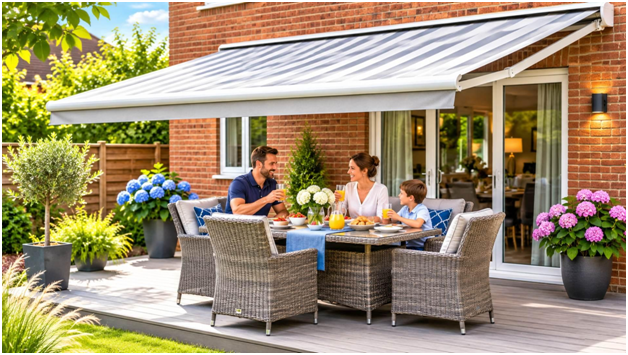
British weather is rarely consistent, so reliable cover is one of the most useful investments for outdoor dining. Fixed structures such as pergolas provide permanent shade, while more adaptable options allow you to open or close the canopy as conditions change. In the middle of planning, many people find that patio awnings strike a practical balance: they can be extended when needed and retracted when not required, preserving the open feel of the patio.
When considering any form of cover, think about the height and projection needed to protect the table area without making the space feel enclosed. Fabric choice affects both appearance and performance – fade-resistant and water-repellent materials help the canopy last longer and stay looking tidy. Motorised or manually operated systems each have advantages depending on how often you expect to adjust the cover.
Lighting for Evening Use
Good lighting extends the hours you can enjoy the patio. Soft, warm light is generally more flattering and relaxing than bright overhead fittings. String lights, lanterns or low-level path lights create an atmosphere without overwhelming the space. If power is available, consider weatherproof wall lights or freestanding lamps that can be moved as needed.
Solar-powered options reduce the need for cabling and are simple to install. Whatever style you choose, aim for layered lighting – ambient light for the overall area, task light over the table and perhaps a few accent points to highlight plants or features.
Adding Warmth and Comfort
Even on milder evenings, a little extra warmth makes outdoor dining more appealing. Portable heaters, fire pits or built-in radiant heaters can extend the season. Place them safely, following manufacturer guidance on clearances and ventilation. Soft furnishings such as throws and outdoor rugs add comfort and help define the dining zone.
Wind can quickly spoil an otherwise pleasant meal. Screens, planting or carefully positioned furniture can reduce draughts without blocking views. In more exposed locations, partial side panels or windbreaks may be worth considering.
Finishing Touches That Make the Space Feel Complete
Plants bring life and colour to an outdoor dining area. Choose species that suit the light levels and require a level of care you are happy to provide. Climbers on trellis, pots of herbs near the table, or a simple arrangement of evergreen shrubs can soften hard surfaces and create a more enclosed, room-like atmosphere.
Tableware and accessories matter too. Outdoor-friendly plates, glasses and serving pieces reduce the risk of breakage and make clearing up easier. A side table or trolley keeps essentials close at hand. Music can be provided discreetly with weatherproof speakers if desired, but keep volume low so conversation remains easy.
Practical Considerations and Common Decisions
Several practical points influence how successful the transformation will be:
- Drainage and surface level – ensure water can run away freely and that furniture sits stably.
- Power and water access – useful for lighting, heaters and cleaning.
- Storage – plan where cushions, covers and seasonal items will be kept.
- Maintenance – choose materials and finishes that match the time you are willing to spend on upkeep.
- Local rules – check whether any permanent structures require planning permission, particularly in conservation areas or on listed properties.
If the project involves structural changes, electrical work or significant alterations to the building, professional advice is often the safest route. An experienced installer or designer can help avoid costly mistakes and ensure the finished space works well for years.
FAQs
What is the best way to protect an outdoor dining area from sun and rain?
A combination of suitable furniture materials and a flexible cover provides the most practical protection. Retractable options allow you to adjust the amount of shade or shelter according to the weather while keeping the patio open when conditions are good.
How can I make my patio dining area comfortable in the evening?
Layered lighting, a source of gentle heat and soft furnishings such as cushions and throws make the biggest difference. Positioning seating to avoid the strongest winds also improves comfort.
Do I need planning permission for adding cover over a patio?
In many cases, smaller or retractable covers fall under permitted development, but rules vary. Always check with the local planning authority if the structure is permanent, large, or if the property is listed or in a conservation area.
What furniture materials last well outdoors?
Hardwoods such as teak, powder-coated metals and high-quality synthetic weaves generally perform well. Look for pieces designed specifically for outdoor use and follow any care recommendations from the manufacturer.
How important is the orientation of the patio when planning outdoor dining?
Orientation affects sun exposure, wind patterns and the amount of natural light at different times of day. Understanding these factors helps with furniture placement, the choice of cover and the positioning of lighting and heating.
Conclusion
Transforming a patio into a comfortable outdoor dining room is largely a matter of careful planning, suitable furniture and reliable weather protection. Practical choices about shade, lighting, warmth and surface condition determine how often the space will be used.
With the right combination of elements, including well-chosen patio awnings where flexible cover is needed, the patio can become a genuinely useful part of everyday living rather than a space reserved only for perfect summer days.