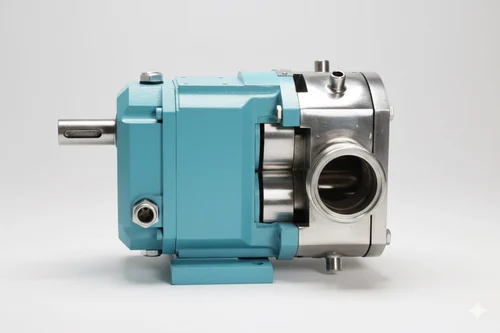
Many facility managers and production leads assume that industrial pumping equipment is a largely interchangeable commodity. The thinking is that if a pump can move a liquid from point A to point B, it has performed its core function. However, the reality of handling complex, viscous, or temperature-sensitive substances is far more nuanced. Relying on generalized equipment for specialized applications often leads to diminished efficiency, increased maintenance requirements, and unnecessary product waste.
Common assumptions about fluid movement that often lead to inefficiency
A prevalent oversimplification in industrial settings is the belief that higher pump speed always equates to better throughput. Operators sometimes push equipment beyond its intended operational range in an attempt to meet production goals, assuming that as long as the pump is running, the process is optimized. This approach often ignores the physical reality of fluid dynamics, particularly when dealing with substances that have high viscosity.
When a pump designed for thin liquids is tasked with moving dense or abrasive materials, the internal components experience significantly higher levels of stress. This can lead to cavitation, where vapor bubbles collapse and damage internal surfaces, or excessive friction that generates heat. In many cases, the pump may continue to move the product, but it does so while compromising its own longevity and potentially altering the properties of the material being moved.
Furthermore, there is a common assumption that a single, standardized pump design can serve all areas of a facility. While this might be convenient for inventory management and spare parts, it rarely results in peak performance across different production lines. The physical requirements of a line moving bulk raw ingredients are frequently different from the requirements of a line handling delicate finished products, necessitating a more targeted selection of technology.
Why mechanical precision and internal architecture matter more for product integrity
When moving sensitive materials, the way a pump interacts with the fluid is often more important than the raw speed of the pump. Many industrial processes require a consistent, low-shear environment to maintain the quality of the product. This is particularly true for chocolate transfer pumps, where the goal is to move the product without damaging its delicate molecular structure, introducing air, or causing unnecessary temperature fluctuations.
Precision in pump design allows for a more predictable flow rate, which in turn leads to more accurate dosing and blending. When internal tolerances are tightly controlled, the pump can handle a wider range of viscosities while maintaining a consistent output. This stability reduces the need for frequent manual adjustments and minimizes the risk of product degradation.
Another factor that often matters more than general output is the material compatibility of the pump’s internal components. Seals, rotors, and housing materials must be selected based on the specific chemistry and temperature profile of the fluid being moved. In food-grade or sensitive chemical applications, these materials must not only survive the process but also prevent contamination and withstand frequent cleaning cycles. Designing a system that accounts for these variables ensures that the pump supports the overall quality goals of the production facility.
How to evaluate pump performance in real-world operating conditions
Discerning the difference between a pump that is simply “moving fluid” and one that is “optimizing the process” often comes down to observing how the equipment performs under load. A helpful starting point is to monitor the energy consumption and vibration levels of the unit during operation. Higher-than-expected energy draw or increased vibration can be early indicators that the pump is struggling against the fluid’s resistance or that the system design is forcing the unit to operate outside of its efficiency window.
Operators should also pay close attention to the consistency of the output. If a pump requires frequent recalibration to maintain a specific flow rate, or if the product shows signs of inconsistencies that correlate with pump speed changes, it is often a signal that the pump’s mechanical architecture may not be the best fit for that specific application.
When evaluating potential upgrades or replacements, it is useful to ask providers specific questions about how their equipment handles:
- Temperature fluctuations and the potential for the product to thicken or thin during transfer.
- The impact of the pump’s internal design on the shear sensitivity of the material.
- The ease of cleaning and sanitization, particularly in systems that transition between different product batches.
- The relationship between operating speed and wear on internal parts.
Asking these questions helps shift the focus from the pump’s initial price point to its long-term operational impact on the facility.
Reframing the role of transfer technology in production success
Instead of viewing pumping equipment as a standalone mechanical necessity, it is more useful to see it as an integrated component of a broader production strategy. A well-selected pump does more than move a liquid; it stabilizes the entire line, preserves the quality of the raw materials, and reduces the frequency of unexpected downtime.
When facilities prioritize the specific requirements of their fluids—whether they are looking for reliable transport pumps for general utility or specialized solutions for high-viscosity transfer—they create a more robust production environment. This shift in perspective moves the conversation away from finding a quick, general-purpose fix and toward building a durable, efficient, and high-performing system.
Ultimately, the most successful production lines are those that treat each transfer point as a critical link in the value chain. By matching the mechanical capabilities of the equipment to the physical needs of the material, facility managers can achieve a level of consistency and operational ease that is difficult to reach with generalized equipment. The goal is a system that works in harmony with the product, ensuring that the integrity of the material is maintained from the start of the process to the final destination.