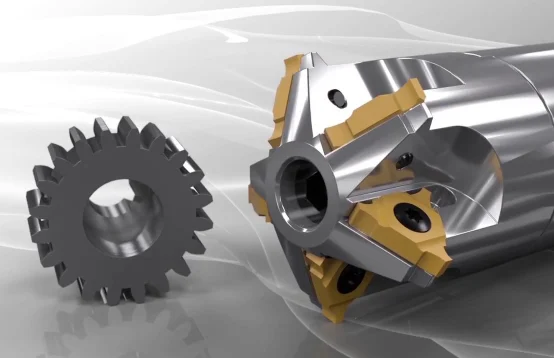
Gear manufacturing plays a critical role in modern industries such as automotive, aerospace, construction, heavy machinery, and industrial automation. Precision gears are essential for smooth power transmission, mechanical efficiency, and reliable machine performance. To produce high-quality gears, advanced gear cutting processes and durable gear cutting tools are required.
Modern manufacturing industries rely on precision-engineered cutting tools to create accurate gear profiles, maintain dimensional consistency, and improve production efficiency. High-performance gear cutting solutions help manufacturers achieve better productivity and long-lasting mechanical performance.
What Is Gear Cutting?
Gear cutting is a machining process used to manufacture gears with accurate tooth profiles and dimensions. Specialized cutting tools and machines are used to remove material from metal blanks to create different types of gears.
The gear cutting process is widely used for producing:
- Spur gears
- Helical gears
- Bevel gears
- Worm gears
- Spline shafts
- Industrial transmission components
Precision gear manufacturing ensures smooth mechanical movement and efficient power transmission across various applications.
Importance of Gear Cutting Tools
The quality of a gear depends heavily on the precision and durability of the cutting tools used during manufacturing. Advanced gear cutting tools help improve accuracy, reduce production errors, and increase machining efficiency.
Key Benefits Include:
- High dimensional accuracy
- Improved gear performance
- Better surface finish
- Faster production speed
- Reduced tool wear
- Consistent manufacturing quality
Reliable gear cutting solutions are essential for industries that require precision-engineered components.
Types of Gear Cutting Processes
Different manufacturing requirements use various gear cutting methods depending on gear design and application.
Gear Hobbing
Gear hobbing is one of the most common gear manufacturing processes. It uses a rotating hob cutter to create gear teeth continuously and efficiently.
Advantages:
- High production speed
- Suitable for mass production
- Excellent accuracy
Gear Shaping
Gear shaping uses a reciprocating cutting tool to generate internal and external gear profiles.
Benefits:
- Ideal for complex gear designs
- Suitable for internal gears
- Precision cutting capability
Gear Milling
Gear milling involves using milling cutters to machine gear teeth individually.
Applications:
- Small production batches
- Custom gear manufacturing
- Specialized gear designs
Broaching
Broaching is used for internal gear and spline manufacturing with high precision.
Features:
- Fast machining process
- Accurate internal profiles
- High repeatability
Modern gear cutting technologies improve production quality and machining efficiency.
Types of Gear Cutting Tools
Different cutting tools are used depending on the gear type and manufacturing process.
Gear Hobs
Gear hobs are cylindrical cutting tools used for gear hobbing operations.
Features:
- High-speed cutting
- Continuous gear production
- Precision tooth generation
Gear Shaper Cutters
Used in gear shaping machines to create internal and external gears.
Advantages:
- Accurate tooth profiles
- Suitable for complex gears
- Long tool life
Milling Cutters
Gear milling cutters are used for custom gear production and specialized applications.
Benefits:
- Flexible machining
- Suitable for various gear sizes
- Cost-effective for small batches
Broaches
Broaches are precision tools designed for internal gear cutting operations.
Applications:
- Internal splines
- Keyways
- Precision internal gears
Professional gear cutting tools are manufactured using high-quality materials for durability and consistent performance.
Industries Using Gear Cutting Tools
Gear manufacturing is essential across multiple industrial sectors.
Automotive Industry
Used in transmission systems, engines, and drivetrain components.
Aerospace Industry
Precision gears support aircraft systems and mechanical operations.
Industrial Machinery
Gear systems are widely used in manufacturing equipment and automation systems.
Construction Equipment
Heavy machinery requires durable gears for reliable performance.
Marine and Power Industries
Gear mechanisms support propulsion and power transmission systems.
Advanced gear cutting solutions support efficient and reliable industrial operations.
Features of High-Quality Gear Cutting Tools
Modern manufacturing industries require cutting tools that provide precision, durability, and high production efficiency.
Precision Engineering
Accurate cutting geometry ensures consistent gear quality.
High Wear Resistance
Durable materials increase tool lifespan and reduce replacement frequency.
Heat Resistance
Advanced coatings improve performance under high-temperature machining conditions.
Superior Surface Finish
Quality tools produce smoother gear surfaces and better mechanical performance.
Reliable gear cutting tools improve machining productivity and operational efficiency.
Benefits of Precision Gear Cutting
Improved Mechanical Performance
Accurate gears ensure smooth power transmission and reduced vibration.
Increased Production Efficiency
Advanced cutting tools reduce machining time and improve output.
Reduced Manufacturing Errors
Precision cutting minimizes dimensional variations and rejects.
Longer Equipment Lifespan
High-quality gears improve machine durability and operational reliability.
Professional gear cutting processes help industries maintain high manufacturing standards.
Choosing the Right Gear Cutting Tools
Selecting the correct tools is essential for achieving accurate and efficient gear manufacturing.
Consider Material Type
Choose tools suitable for steel, alloy, cast iron, or hardened materials.
Evaluate Production Requirements
Select tools based on production volume and gear complexity.
Check Tool Coatings and Durability
Advanced coatings improve wear resistance and cutting efficiency.
Ensure Precision Standards
Use tools manufactured to international quality standards.
Trusted manufacturers provide customized gear cutting tools for different industrial applications.
Importance of Tool Maintenance
Proper maintenance improves tool lifespan and machining performance.
Regular Inspection
Monitor tool wear and damage regularly.
Proper Storage
Store tools in dry and protected environments.
Correct Machining Parameters
Use recommended cutting speeds and feeds.
Timely Reconditioning
Regrinding and reconditioning help maintain cutting accuracy.
Maintaining gear cutting tools properly improves productivity and reduces operational costs.
Future of Gear Cutting Technology
Modern manufacturing industries are adopting advanced technologies such as CNC machining, automation, and smart manufacturing systems. These innovations improve gear cutting precision, production speed, and overall manufacturing efficiency.
Advanced materials and coating technologies are also improving the durability and performance of modern gear cutting solutions.
Conclusion
Precision gear cutting is essential for producing high-quality gears used across automotive, aerospace, industrial, and heavy machinery applications. Advanced gear cutting tools help manufacturers achieve accurate machining, improved productivity, and reliable mechanical performance.
By investing in high-quality cutting tools and precision manufacturing processes, industries can improve operational efficiency, reduce production errors, and ensure long-lasting gear performance for various industrial applications.