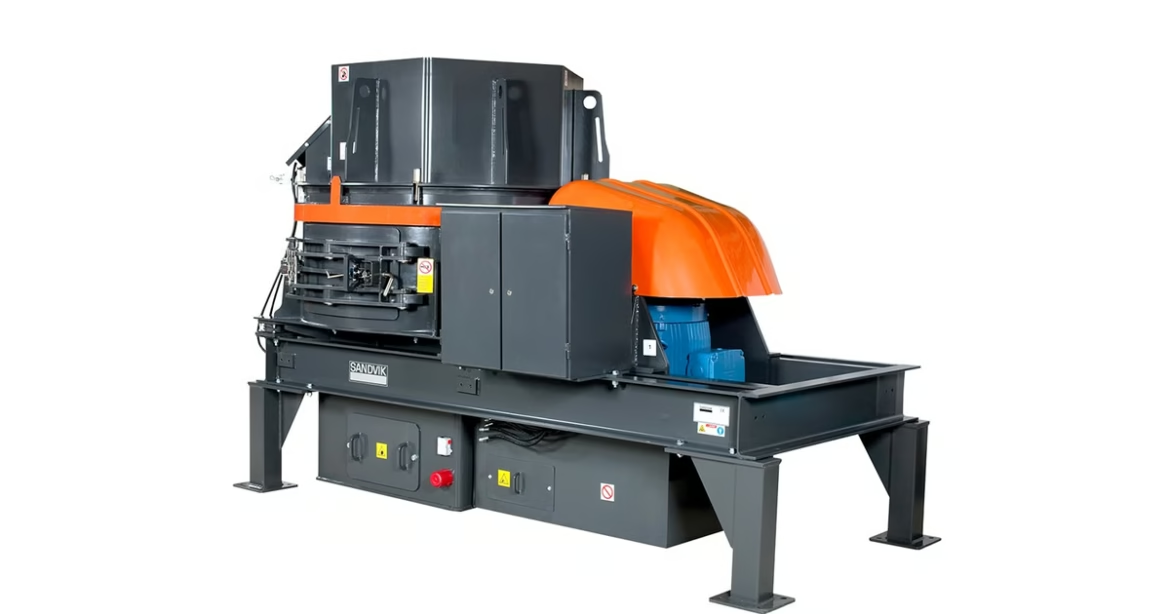
Aggregate processing depends on more than reducing large rocks. The final material must also have the right shape, grading, and consistency. A VSI impact crusher helps refine aggregate during the later crushing stages, supporting smoother screening, better product control, and more reliable performance across the complete production line for operators.
Introduction
Aggregate production involves several connected stages, each designed to control size, shape, and quality. Primary and secondary crushers handle the heavier reduction work, but the final material may still require further shaping before screening and classification. The CV216 VSI impact crusher performs this later-stage role by accelerating prepared feed through a vertical rotor and directing it into a controlled crushing chamber. Its rock-on-rock action helps break weak edges, improve particle form, and create a more consistent product. When correctly positioned in the processing line, it supports efficient tertiary or quaternary crushing without replacing the essential functions of upstream equipment stages.
How a VSI Impact Crusher Works
A vertical shaft impact crusher uses a fast-spinning rotor to accelerate prepared material. The feed enters from above, moves through the rotor, and is thrown into the crushing chamber at high speed. Instead of depending mainly on compression between metal surfaces, the process uses repeated impact to break and reshape the particles.
In a rock-on-rock arrangement, the accelerated material strikes a naturally formed bed of rock inside the chamber. This reduces direct contact between the feed and metal surfaces while allowing particles to collide with each other. Weak edges break away, flatter pieces are reshaped, and the output becomes more uniform. The result is controlled reduction combined with improved particle form rather than simple size reduction alone.
The Role of a VSI in the Crushing Process
A VSI crusher normally sits after the primary and secondary crushing stages. The primary crusher accepts larger feed and completes the first major reduction. A secondary crusher then brings the material down to a size that can be handled more effectively by the VSI.
At this point, the processing goal changes. The plant is no longer focused only on breaking large rock. It is working towards a finished aggregate with a controlled top size, suitable shape, and consistent grading. This is why a VSI is generally used for tertiary or quaternary crushing. It refines material that has already passed through earlier equipment and prepares it for screening, classification, or further controlled processing.
How It Improves Aggregate Shape
Particle shape matters because elongated or flaky pieces can affect how aggregate packs, handles, and performs in its intended application. A VSI helps reduce these unwanted forms by creating high-energy collisions inside the crushing chamber. The action removes weak edges and encourages a more cubical and consistent product.
The CV216 VSI impact crusher is designed for applications where product shape and controlled reduction are important. It can process suitably prepared materials in aggregate production and other approved crushing duties. However, final quality still depends on the complete circuit. Feed grading, moisture, material hardness, rotor speed, screen efficiency, and recirculating load all influence the finished result. The crusher should therefore be treated as one connected part of the plant rather than an isolated solution.
How the VSI Works With Screening Equipment
After leaving the VSI, the crushed material normally moves to a screening stage. Screens separate the product into the required size fractions and identify material that remains too large. Correct screen selection is essential because poor separation can overload conveyors, increase recirculation, and reduce the consistency of the finished stockpile.
A closed-circuit arrangement returns oversized material to the crusher for another pass. This gives the plant greater control over top size and grading. An open circuit allows material to move forward without returning it to the VSI. The right layout depends on the target specification, available space, throughput requirements, and the amount of control needed over the final product.
Why Feed Control Is Important
Stable feed is one of the most important conditions for reliable VSI performance. Sudden surges can increase the operating load, while gaps in the feed can create uneven crushing conditions. Oversized material may also disturb the process or place unnecessary stress on the equipment.
The upstream crusher, feeder, transfer points, and surge capacity should be planned as a complete system. Material entering the VSI must remain within the permitted feed size and should arrive at a steady rate. Conveyors and screens must also be sized for both fresh feed and any returning oversized material. When these elements are balanced, the crusher can operate more consistently and the entire aggregate processing line becomes easier to control.
Managing Rotor Speed and Product Grading
Rotor speed influences how much energy is transferred to the material. A higher speed can create greater impact and finer reduction, but it may also affect power use, wear, and the amount of fine material produced. Settings should be changed gradually and checked against actual product tests rather than adjusted through assumption.
Operators should monitor throughput, power draw, vibration, product grading, and wear patterns together. Looking at only one measure can give an incomplete picture. Higher output is not always an improvement if product quality falls or the recirculating load rises sharply. Regular operating records make it easier to identify gradual changes and correct them before they develop into larger production problems.
Maintenance and Operating Efficiency
Routine inspection supports safe operation and helps prevent avoidable stoppages. Wear components should be checked at planned intervals, and the rotor should remain correctly balanced after maintenance or component replacement. Clean access around service areas also helps technicians complete work safely and efficiently.
Plant layout has a direct effect on maintenance time. Adequate working space, safe lifting arrangements, clear inspection points, and sensible access routes should be considered before installation. Operating cost should also be measured per tonne of saleable product rather than judged only by power consumption or purchase price. Wear life, labour, downtime, rejected material, and unnecessary recirculation all contribute to the true cost of running the line.
Conclusion
A VSI impact crusher plays a specialised but important role in aggregate processing. It follows the heavier reduction stages and focuses on refining particle shape, controlling size, and preparing material for final screening. Its effectiveness depends on stable feed, suitable upstream crushing, correctly sized conveyors and screens, careful rotor settings, and planned maintenance.
When these parts work together, the plant can produce more consistent aggregate while managing wear, power use, recirculation, and downtime more effectively. The CV216 VSI impact crusher fits best into a well-balanced tertiary or quaternary circuit where feed conditions and output targets are clearly defined. It should be selected and operated as part of the complete processing line, not as a standalone machine. With thoughtful circuit design and regular performance checks, it can support reliable production, controlled grading, improved particle form, and a lower overall cost per tonne of saleable material.